The world of market research is in a constant state of evolution, and right now, Artificial Intelligence is driving some of the most exciting changes. We’ve seen this first-hand with our own AI initiatives here at Askia, like the launch of Ask IAN and our new AI-powered survey scripting. But AI is also fundamentally transforming how we handle unstructured, qualitative data.
Work that once took hours of manually reading, sorting, and categorizing verbatim responses has been accelerated dramatically. However, not all AI-assisted coding tools are created equal.
That’s why we are incredibly excited to share the news about the biggest update in a decade to codeit—the powerful verbatim coding technology we proudly offer to Askia clients.
Rebuilt from the Ground Up
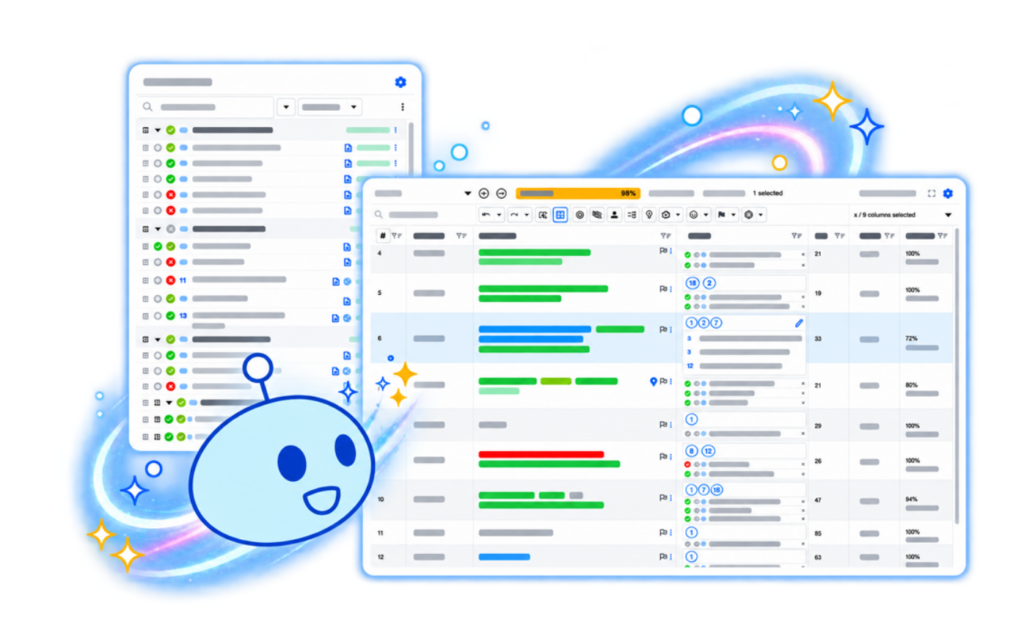
The new version of codeit has been completely rebuilt from the ground up. It features a thoughtfully redesigned coding screen and a much broader range of AI-assisted capabilities. Researchers can now take advantage of:
- Smart theme-splitting: Easily identify where a broad, coarse theme contains multiple distinct ideas.
- Semantic AI search: Find relevant responses based on meaning and context, rather than relying strictly on exact keyword matches.
- Duplicate-theme detection: Highlight potential overlaps in your codeframe before they become problematic.
Crucially, these new features sit alongside faster filtering, more flexible codeframe editing, and the ability to compare verbatims from another wave, task, or project—all without ever leaving the coding screen.
AI Assistance vs. AI Autopilot
There is a lot of understandable excitement around AI verbatim coding right now. But look underneath the surface of many products on the market, and you’ll find little more than a generic LLM wrapped in a simple user interface. You send your verbatims, ask the model to generate a codeframe, let it assign codes, and display the results in a table.
While that can be somewhat useful, it isn’t a proper human-in-the-loop workflow. And for professional researchers, that distinction matters.
Researchers must make judgments about nuance, context, terminology, and relevance. They need to decide whether subtly different responses belong under the same theme, where codes overlap, and whether an unexpected result warrants further investigation. AI can absolutely help with all of this—but the researcher should be the one making the decisions.
The Difference Between AI-Powered and AI-Assisted
Any AI-enabled coding tool can produce an answer. However, a genuinely great coding tool helps a researcher arrive at an answer they completely trust and understand. This means giving you practical ways to investigate, review, and refine what the AI is doing, rather than blindly accepting its output.
With the new codeit update, you can ensure deliverable standards of quality by asking:
- Can I see the responses behind a theme and investigate them?
- Can I search by meaning rather than exact keywords?
- Can I easily adjust a codeframe to capture subtlety, granularity, and domain expertise?
- Can I quickly override AI autocoding to apply the unwritten rules that a generic LLM can’t possibly know?
- Can I filter the data precisely enough to investigate a particular subgroup?
These aren’t just cosmetic features. Without functionality to support all of this, a tool isn’t really ‘human in the loop’—it’s just ‘human on the end of the pipeline.’
Keeping Experts in the Driving Seat
At Askia, we believe that AI should remove repetitive work without removing professional judgment. This update to codeit perfectly aligns with that philosophy. It expands AI assistance throughout the coding workflow while keeping the researcher firmly in the driving seat.
Good AI shouldn’t ask experts to stop thinking. It should help them move faster, explore more deeply, and produce better work, while keeping them firmly in control.
Want to see the new codeit in action?
If you’d like to discover how these new AI-assisted features can streamline your verbatim coding, contact your Askia account manager to arrange a demonstration today.